Friday, October 23, 2020

The Fall of the House of Usher (1960)

Welp, in two days it will have been precisely seven (7) years since my last post. Many things have changed. Dear God. But it turns out I still love movies. 

I'm a Shudder subscriber. From my perspective, their programming kinda sucks. But at least they have the good sense to make a few of the luscious and mesmerizing American International Pictures Roger Corman / Vincent Price Edgar Allan Poe cycle of films available at a time of year when they really should be using that platform to serve up little else. 

Where to begin, what to say. For atmosphere, style, class, mouth-watering “period attire,” deliciously sinister theatrics, a demented lead played by one of horror’s greatest icons at the height of his powers, a lush score, and genuinely chilling set pieces, this handsome, lean (79 minute run-time) 1960 macabre masterpiece featuring all of four actors puts most of the shit shoved onto our plates nowadays by Netflix, Amazon Prime, Hulu, et al. to shame. There I said it.

Corman and Price conspire to ratchet up the tension right to the end and it’s all offset by just the right pitch-perfect dash of camp. And, boy howdy, what a frenzied, rip-roaring finale.

Guess they don’t make horror like they used to. But we’ll always have this viscerally satisfying take on The Fall of the House of Usher

πŸŽ₯πŸΏπŸŽƒπŸ’€πŸͺ“⚰️πŸπŸ‚

Friday, October 25, 2013

The Invisible Man (1933)

In a few weeks it will be the 80th anniversary of the 1933 theatrical release of Universal Pictures' The Invisible Man.  I just revisited it while crashed out on the couch, wrecked by the cold that finally caught up with me this week.  There's way too much to love about this spectacular movie.  But I'll keep it brief. 

Directed by James Whale, who made history with Mae Clarke and Karloff two years before with Universal's Frankenstein, The Invisible Man was Claude Rains' first American film appearance.  For my money, his turn as an obscure chemist become a deranged freak of science gone awry gives us the most charismatic screen villain of all time.  His maniacal rants, explosive rage and giddy, giggly homicidal sprees foreshadow later iconic villains like Anthony Hopkins' Hannibal Lecter and Jack Nicholson's and Heath Ledger's Jokers.  That would be enough to earn Rains a place of honor in the annals of cinematic horror.  But I think that, in a way, his performance surmounts what later actors accomplished.  This is largely due to the fact that he gets it all across with only his voice and a pair of pajamas. 

Rains is Jack Griffin, an unknown laboratory researcher whose dreams of scientific prestige lapse into megalomania as the chemical formula responsible for his invisibility -- his intended legacy -- slowly corrupts his mind.  Dangerously unhinged and desperate for an antidote, Rains radiates sinister intensity, alternating between delusional speeches about ruling the world with invisible armies and hysterical mirth as he cavorts in the nude, running amok, compulsively destroying property and wasting innocents left and right in a slapdash reign of terror.  Rains treads a razor-thin line with stupefying nonchalance.  He's funny but really quite disturbing.

Of course I wasn't there in 1933 to join everyone in seeing it for the first time (oh for another of H.G. Wells' fantastic devices, a time machine!), but 80 years of changing trends and conventions somehow take nothing away from the film's eerie energy.  Even through my crass Netflix looking glass and foggy flu goggles, Rains is mesmerizing and his performance feels fresh and surprising.  And it bears repeating: his portrayal would likely have the same impact in a radio format.  We only see Rains' face in the film's tragic final frame.  Virtually everything remarkable that he brings to the film he accomplishes with his voice.  It's hard to overstate what that says about his sheer magnetism.  You can't take your eyes off him.  And it's hard not to find yourself secretly rooting for him.  Maybe that's just me.

Here's a highlight reel.  But if you like nice things, don't spoil the high points and just watch the whole thing instead:


Fun fact: In the film, Griffins' former mentor, a respected chemist and father of The Invisible Man's perpetually hysterical love interest, is played by Henry Travers, the avuncular, earthbound angel in Frank Capra's 1946 It's a Wonderful Life.  But enough about Christmas.

Friday, June 14, 2013

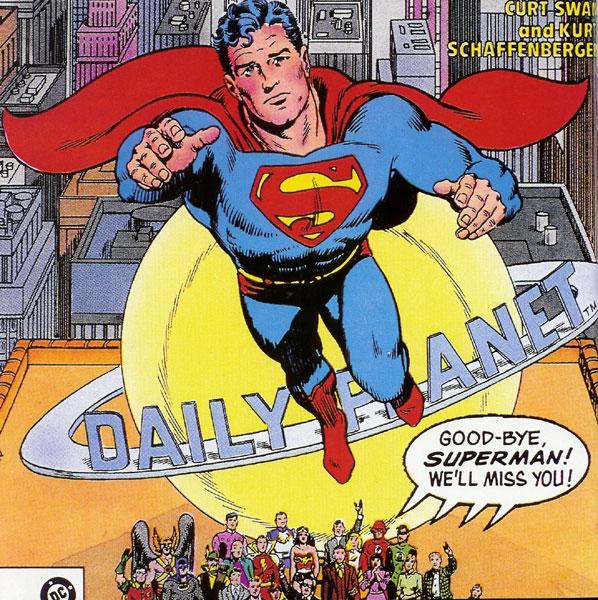
Man of Steel (2013)

I saw Man of Steel last Friday night.  I haven't digested it adequately but I'm happy just to say the following and leave it at that.  There are no overt spoilers below, but I vaguely imply some secret story content.  Fair warning. 

The movie is a testament Hollywood's refinement of the art of making bloated or muddled stories into cinematic experiences so spectacular that they dull your senses and leave you not wanting to think too hard about what you've just been through.  It could just be my starry-eyed infatuation with the character, but I wanted to invest in what was happening.  And I almost did.  There really are some exhilarating and emotionally resonant moments.  The movie is hardly garbage, and that's what ultimately made the experience so frustrating.

However, a catastrophic characterization blunder in the climactic scene and the film's gross weight in every sense ruined what was an otherwise promising reboot.  No one takes these kinds of movies, and this character in particular, more seriously (in every good and bad sense) than I do.  But Man of Steel really makes me doubt whether we haven't finally run the superhero genre into the ground.

The movie buckles under its own excesses: it's too brooding; it's too long; it's (inevitably, these days) too encumbered by CGI; and it makes too many concessions to the dismal century we live in.

Now of course you can "re-imagine" iconic characters like Superman in all sorts of ways, for all sorts of reasons.  Batman, for instance, should keep pace with the world.  The character is made for reinvention.  This is partly because the character is of this world.  He is mortal.  Moreover, he's a tragic character, conceived in senseless violence and essentially belonging to its insane trajectory, destined to ride it right into the grave, even as the symbol he embodies transcends the fate to which the man behind it must be subject.  That's why Christopher Nolan's vision fits so well, why he was the right choice to helm Batman's latest cinematic incarnation, and why he was right to kill the character off at the end (shameful, incredible, perfunctory pandering and ass-covering during the final moments of The Dark Knight Rises notwithstanding).

But Superman's strength consists in being fundamentally different.  As the archetypal "strange visitor from another planet," he is not of this world.  We permit him the moral absolutes that the world as we actually find it won't permit of us.  We can do this because there should be a place for indulging our impossible ideals.  Their impossibility is less poisonous and confounding when it can be given free reign in an escapist fantasy.  An icon that dirties his hands to the extent that Nolan/Snyder's Man of Steel does cannot be the symbol of hope the film sets him up to be.  His uniqueness is lost, which is bad enough, but so is his therapeutic value to people exhausted by moral and spiritual compromise. 

Introduced in 1938, Superman is a creature of the American Century.  To me, anyway, he belongs alongside Norman Rockwell and New Deal civic idealism.  And if "alongside" is too close for comfort, he ought to stay in the neighborhood.

Of course, these are quaint artifacts of a naivety we've supposedly outgrown.  And we can't recapture that time and its way of expressing its guiding ideals.  It's gone and we shouldn't nurture the silly hope of recovering the lost innocence of a pristine, golden age.  That kind of romanticism is unhealthy if anything is.  So I don't mean to suggest that the character of Superman should be reverently preserved.  The plain fact is that changes in how our shared icons are expressed inevitably reflect changes in our own collective self-understanding.  So it's never a question of whether to alter an icon, only a question of how far and why.

But we need untimely heroes in our popular mythology, if only as a counterpoint to the prevailing cynicism and weary resignation of an age of rabid state surveillance, shrill, talking-point politics, class polarization, austerity, child soldiering, drone warfare, and a host of other demoralizing horrors brought home by the daily headlines.  We may have to settle for Weber's iron cage, in the end, but we should not be so eager to allow Nolan's grim, ashen ambiance to colonize every corner of our imagination along the way.  We should resist it, but we need help.  And far from helping to cultivate hope in this enterprise, Man of Steel all but ignores the moral stakes of responding to "terror" and apocalyptic violence in kind.

This is irresponsible.  Of all our modern mythological figures, Superman is perhaps best suited to mobilize a defiant idealism in the face of the world as we find it.  This is so given his star-spangled, insouciant and optimistic origins.  The film abandons these qualities at super-speed, and that's where it misses the mark by the widest margin with the worst consequences for us.

Nolan's Dark Knight films helpfully suggest that our highest and most uncompromising ideals, say those of "truth and justice," may not be able to withstand a careful, realistic accounting.  Maybe The Dark Knight is right to suggest that our world isn't ready for "the hero we deserve," that "the truth isn't good enough--sometimes people deserve more."  Or maybe The Dark Knight Rises is right to suggest instead that the truth should be allowed to "have its day," however ugly and destructive it turns out to be.

The Dark Knight films take these difficult possibilities seriously by showing how much is at stake in the questions they raise.  Batman and Jim Gordon pay a high price for the gut-wrenching decisions they make, and the cost is personal.  They agonize over them long after the deeds are done.  This is because, like real actions undertaken by real people, they have lasting and unpredictable consequences.  Man of Steel ends with a gut-wrenching decision followed by a vacant smile, some cheap laughs and a shrug. 

This review gets a lot of things right.  The movie was indeed joyless.  But this one really nails it, right down to calling out Snyder's utter failure to learn anything from Alan Moore, and hence from the best of the storytelling medium he's cashed in on, not just once (with Watchmen) but, now, twice, with his handling of Superman.

What a disappointment, partly because the film really does get a lot right.  The casting, for instance, was exceptional overall.  But even here there's a fatal flaw: Amy Adams was really uninspiring as Lois Lane, a character with as much potential for dignity, style, humor and brass as any you'll find in our pop culture pantheon.  And her onscreen chemistry with Cavill's Kal-El/Clark Kent rivals this for non-starterdom, which is saying a lot.

There's been a lot of enthusiastic talk about how much Henry Cavill looks the part of Superman.  There's no denying that, and he does fine as the troubled loner and reluctant savior that a lot of modern comics make the character out to be.  It's cool when he punches shit over and over.  And to me it ends up being about as thoughtful and inspiring as that sounds.

I recall Christopher Reeve's remark that, from his point of view, Superman is a pacifist, and I can't help wondering how many tickets you could sell to modern audiences with that approach to the violence and destruction to which the character is inevitably forced.  I don't know what John Q. Public deserves these days, particularly given how happy he seems to be to settle for movies like this.  But at the risk of overusing the reference, I wonder whether Nolan/Snyder's Man of Steel is the Superman we really need, or just the one we think we do.

Sunday, April 14, 2013

Batman (1943)


“BAT-MAN, yes BAT-MAN: clad in the sombre costume which has struck terror into the heart of many a swaggering denizen of the underworld!”

My multi-volume VHS copy of this Columbia Pictures chapter play, released eighteen months after the Japanese attack on Pearl Harbor, kept me from offing myself throughout middle school.  The Batman mythos was still embryonic only four years after the character’s comic debut.  But this serialized tale, his earliest celluloid incarnation, shoehorns it into the war effort.  The results are mixed, but so are my feelings about everything.

The Dynamic Duo appear as operatives for the U.S. government rather than independent vigilantes.  Their daunting task: to foil a sinister agent of Emperor Hirohito, mad scientist and would-be Japanese Colonel Sanders lookalike “Dr. Daka,” whose evil ministrations reduce high-profile Americans to freakishly strong but mindless playthings christened as “Zombies” in his electronic laboratory.  His ultimate aim: to acquire vast quantities of radium for the construction of an atomic “lethal mechanism so destructive as to make retaliation by [the enemy] impossible,” thereby ensuring his nation’s victory in the war (sound familiar?).

The series is notable in part for introducing story elements that later became iconic.  Most importantly, it was here that the public first encountered “The Bat’s Cave,” Batman’s subterranean headquarters whose secret entrance is Wayne Manor’s grandfather clock.  Prior to these films, Batman housed his vehicles and equipment either in an “underground hangar” never actually depicted in the magazine or comic strip, or in a dusty old barn somewhere on the Wayne estate grounds.

This earliest version of the Batcave is pretty modest, consisting of a small stone room “hewn from the living rock of the mountain,” featuring a single desk, some filing cabinets and a bat emblem mounted on the wall.  This “strange, dimly-lighted, mysteriously secret Bat’s Cave” (quoth the narrator) is basically a study, though in later episodes an adjoining crime lab is revealed.  At any rate, great things have small beginnings.  And it’s better than a damn barn.

Other artifacts from the era have aged more gracefully, but the show has a certain charm.  At any rate, its shortcomings were entirely lost on me after I discovered it on a dusty Suncoast shelf in the mid 90s, so I refuse to acknowledge them now.  And I think the main theme prefigures Danny Elfman’s brooding score for the 1989 film.  I won’t say what nocturnal capers were inspired by my adolescent infatuation with it.  Just know that if you do not watch it, we’re finished.


Tuesday, April 2, 2013

Atlas Shrugged II: The Strike (2012)


So, using internet magic, I digitally borrowed the sequel to that Atlas Shrugged movie that came out in 2011.  Evidently this one, subtitled "The Strike," was released last October.  Who knew?  I guess the AV Club did, because they wrote this in late December:

The irony of Part II’s mere existence is rich enough: The free market is a religion for Rand acolytes, and it emphatically rejected Part I at the height of the Tea Party movement.

The version of the sequel I acquired has Swedish subtitles, which is the part of the story that I found makes the most sense from the point of view of philosophy and economics. The production values approach TV miniseries grade. From an ideological standpoint, it's even more laughably infantile than the first one, which is saying a lot. But it departs from, and improves upon, the first installment in that not all the villains are played by hideously ugly and disheveled actors, though the heroes are still uniformly sexy and well-groomed.

Also in the plus column: the digital effects aren't half as bad as reviewers made them out to be. But the complete casting turnover and the obvious budgetary nosedive in this sequel do draw an awkward amount of attention to how defiled everyone associated with the first film must have felt.

But if you can keep your lunch down, for all its staggering irresponsibility and hilarious inadequacies, there's something almost quaint about this comforting escapist fantasy of entitlement.  Beyond the infomercial ambiance, something about it recalls the bygone smut of a simpler time, when prodigious bush and a hirsute, nude male ass were more then enough to get you sprung.

Sunday, November 4, 2012

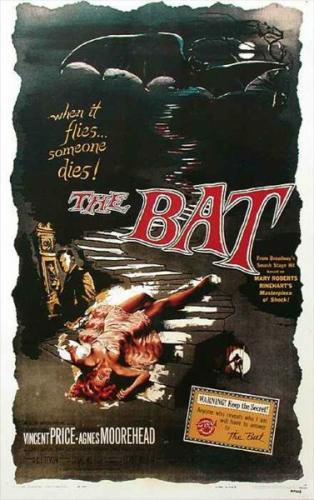
The Bat (1959)

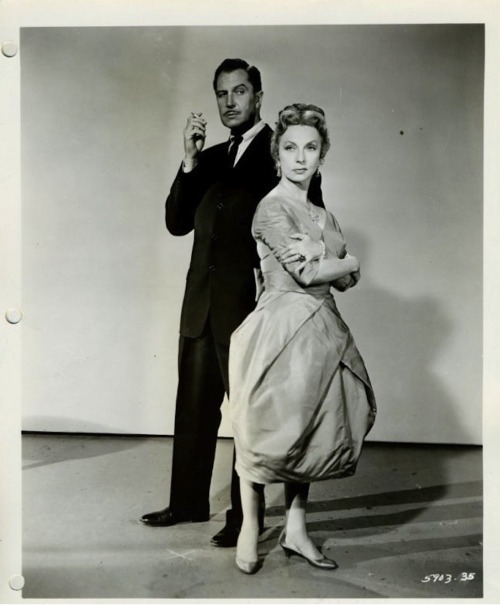
The Bat is a 1959 crime thriller directed by Crane Wilbur and starring Vincent Price and Agnes Moorehead  It's the third film adaptation of a 1920 broadway production of the same name that was first adapted as a silent film in 1926 by Roland West, then again by West in 1930 as a talkie entitled The Bat Whispers.  It's worth noting that Bob Kane credited the masked villain of the 1930 film as an inspiration for the comic book character of the Batman that he co-created in 1939.

The story follows the efforts of the authorities and Cornelia Van Gorder, a popular mystery novelist, to apprehend a mysterious costumed killer known only as "The Bat."  The masked fiend leaves a trail of mutilated corpses in his wake as he prowls the night in search of stolen loot rumored to be hidden somewhere in the country home occupied by Van Gorder and her entourage.

Price turns in a typically charismatic, quietly sinister performance as a doctor drawn into the hunt for the buried treasure, but it is Moorehead's Mrs. Van Gorder, or "Miss Corny" as she is affectionately known by her loyal but petrified maid Lizzy (played by Lenita Lane), who steals the show.


As the bodies pile up, the cops get involved but they are revealed to be bumbling and useless at practically every turn.  Only Van Gorder, a fearless, unflappable, self-fashioned sleuth, proves to be a match for the ruthless Bat in this chilling game of death with a cool million in unclaimed bank securities up for grabs. 


Watch the film immediately or we are finished.


Wednesday, October 24, 2012

comments about the forthcoming remake of Evil Dead (2013) & some idle speculation

So there's a forthcoming remake of Sam Raimi's classic cult horror film Evil Dead.  Watch the red band trailer here.  Obviously the original is iconic and great.  And the remake will probably be fun to watch and I will probably see it when it comes out.  But it represents an obvious trend in Hollywood that is wearing on a lot of people's nerves, including mine.

There are simply too many remakes and sequels these days.  Often they're half or most of what's on offer in major theaters (here are some illustrative figures).  It's lazy and proof that audiences will settle for anything that is effectively packaged as a "major event" or "epic cinematic experience," however unoriginal or derivative it is.  Movies should not have to be "epic" viral phenomena, cynical exercises in pure commercial nostalgia or the visual equivalent of an amusement park ride. 

It's no mystery to anyone why this trend has become so pronounced.  Major studios invest millions into these fucking movies.  Producing something with proven market viability by tapping into the nostalgia or brand loyalty of an existing audience tends to be an extremely safe and reliable play, notwithstanding the occasional flop.  But it sucks for people who want new stories -- and yes, i mean *really* new stories, with unfamiliar dramatic situations and characters -- or who recognize that many of the greatest stories ever told (by Hollywood) were really nothing like the live action video games that pass for movie storytelling now. 

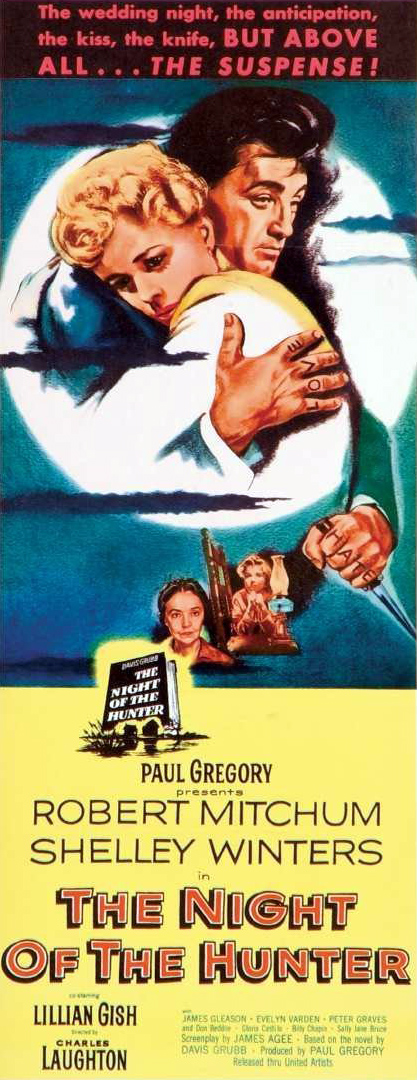
I'll only offer one example to illustrate what I mean.  Consider the classic film noir thriller Night of the Hunter (1955), directed by Charles Laughton and starring Robert Mitchum and Lillian Gish:


Night of the Hunter is a literary adaptation, so in a sense, it's not original, either.  That is, the story didn't originate with a screenplay writer, but with a novelist.  In fact, the novel was inspired by the true story of a man hanged in 1932 for murdering two widows and three children.  Literary adaptations have been big business in movies from the very outset, but they don't qualify as "remakes" or "sequels" in the sense I mean here.  They don't essentially reproduce movies already made or expand an existing film franchise.  While literary adaptations tell stories that are already in circulation among the general public, those stories are new to moviegoers.

I won't go on at length eulogizing Night of the Hunter, but suffice it to say that its standing as one of the great thrillers is well-deserved.  Mitchum depicts a malevolent huckster and predatory killer masquerading as a genteel preacher, the archetypal wolf in sheep's clothing who ends up stalking defenseless children in the night over a large sum of money buried by their dead father.

The movie is suspenseful and the characters are compelling.  Mitchum's portrayal of the twisted 'preacher' is chilling, not least of all because he appears to believe that he is really acting with some sort of divine authorization.  Gish, who plays a voluntary caregiver of lost children, eventually squares off against the preacher.  Her character is staid but shrewd and projects maternal dignity and strength.  She provides an ideal counterweight to Mitchum's obsessive, feral intensity.

The movie's atmosphere is forbidding and dreamlike.  The scenes of the children in flight from their pursuer portray their natural surroundings as dark and menacing; the river which bears them away is almost Stygian.  One feels the threatening presence of the preacher loom large like a shadow over everything, especially when he is absent.

The stark opposition between the characters of Mitchum and Gish, with the fate of three children ultimately hanging in the balance, provides the center of gravity for a story that unfolds ominously and haunts you long after the film is over.

All of this is achieved with a handful of actors and no pants-shitting pyrotechnics concocted for millions by a doughy computer animator.  In fact, none of it could be achieved by any amount of "epic visuals."  That is not the point.  You are drawn into what is happening because the story is good and the performances are powerful and finely observed.

Something you might hear a lot is that the decline of Hollywood for these reasons and others is not a death knell for moviegoers but for the big studios and theater chains.  Roger Ebert has taken this line.  After all, increasingly many of us are spending most of our movie-watching lives on Netflix or some other streaming venue, often watching shit that would never show at a big cineplex.  Plus big theater chains gouge you on overpriced, suicidally super-sized concessions and exorbitant ticket prices that their typically shallow, narrow offerings cannot really justify.  But despite all this, I still love going to the movies.  I've been doing and loving it since I was a small child and probably always will.

So I'll probably watch the shitty Evil Dead remake.  But still.

Monday, October 22, 2012

To the Devil...a Daughter (1976)

There are few things I love more than classic Hammer Horror.  For those who aren't familiar with Hammer Film Productions, it is a British production company founded in 1934 that flourished from the late 1950s through the middle 70s.  Hammer made all sorts of films, but specialized in the fantastic and sensational genres ranging from swashbucklers and prehistoric epics to opulent period pieces, literary adaptations and supernatural thrillers.  

"Hammer Horror" productions are legendary for their Gothic pageantry, moody and macabre set pieces, lavish costumes, theatrical ambiance and colorful dramatic palette.  The studio is probably best known for its stable of remakes and reworkings of classic horror stories, most notably those first popularized by Universal Studios in the 1930s such as Dracula, Frankenstein and The Mummy.  A great many British actors who later came to be known outside the U.K. got their start with Hammer, including Sir Christoper Lee and Peter Cushing (the latter having gone on to depict Grand Moff Tarkin in the first Star Wars film).

I won't turn this post into a precis on Hammer, but I might do a Hammer series in the near future.  Maybe this post will be the first in that series.

My friend Andee was recently looking for something to watch that's fun and scary but not a slasher flick.  I'm fond of some slasher stuff, but my primary interests in the horror genre lie elsewhere.  Slasher films are essentially high-dollar exploitation films.  Like a lot of horror, they're very formulaic, but the slasher formula isn't as fun for me.  I love exploitation movies, but I prefer the earlier stuff that was made on a pitiful budget and was not so self-consciously directed at a massive audience.  There's something naive and refreshing about the work of Herschell Gordon Lewis and Ted V. Mikels that's lost in any of Wes Craven's or John Carpenter's franchise films.  So I thought a Hammer flick might be of interest to my friend.  One of her friends suggested something with satanic themes.  So I suggested Hammer's 1976 occult thriller, To the Devil...a Daughter.  

To the Devil... is pretty notorious and there are a number of reasons why.  The biggest reason is that, since it was a critical flop and a commercial disaster, the film is widely credited with ruining Hammer studios.  The film was an adaptation of a popular novel by occult writer Dennis Wheatley.  It was the second of Wheatley's novels to receive the Hammer treatment, and it was to be the last.  Wheatley had been pleased with Hammer's handling of his work in 1968 with the success of their film The Devil Rides Out, based on his novel of the same name.  But he was outraged by the script of To the Devil...  He felt that it departed too much from his story, whereas he attributed the success of The Devil Rides Out to the film's faithfulness to the letter of the novel.  Indeed, the climactic scene in the film version of To the Devil... is rather awkward and was the result of a last-minute compromise over disagreement within Hammer about how to conclude the movie.  Wheatley refused to allow Hammer to adapt any more of his stories after To the Devil...'s critical and commercial failure.  It ended up being the final horror film Hammer made until the late 2000s when they finally began clawing their way out of financial oblivion. 

Nevertheless, Christopher Lee turns in a fabulous performance as Father Michael Rayner, a demented priest-turned-occult Svengali-figure in service to Satan.  An aging Richard Widmark plays John Verney, an occult writer (and Wheatley's obvious alter ego) who is drawn into the web of treachery, heresy and demonic machinations set in motion by Father Michael.  Widmark's Verney becomes the reluctant protector of a fifteen-year-old Nastassja Kinski, who plays Catherine Beddows, a cloistered, nubile lady of the cloth in thrall to Lee's Father Michael, whose dread purpose is to transform the unsuspecting girl into the Canaanite avatar of hubris, Astaroth.  


To the Devil... was Hammer's misguided attempt to cash in on the occult trend in movies that had worked so well for Rosemary's Baby (1968) and The Exorcist (1973) It can't hold a candle to its competitors, but it's not a worthless effort.  Its greatest strengths are the performances of Widmark and Lee.  These are fine actors doing their best with what they were given, which was a half-baked turd.  For instance, the script was still being reworked throughout the making of the movie.  Widmark was given his revised lines during makeup at the beginning of each day.  He threatened to walk off the set and fly home to the U.S. during shootingScreenplay co-writer Roy Skeggs sat on the edge of his bed in the middle of the night several times, persuading Widmark to stay the course, before finally giving up and ignoring his threats to take the first flight back to L.A.  


Beyond the lead performances, there's some implicit conservative commentary on the spiritually rudderless youth of the day, lots of frontal nudity and plenty of fucked up visuals during the several scenes depicting bizarre and grotesquely eroticized Satanic rituals.  Perhaps the film's greatest perversity is that you're made to think you get to see Christopher Lee's finely sculpted derriere.  But alas, it's a bare-assed body double.  

For all its faults, To the Devil... is classic nunsploitation schlock.  It's comfort food for fans of kinky occult mumbo-jumbo and shameless shock cinema, and well worth the time of anyone with a well-developed taste for the tasteless in film.

Tuesday, June 12, 2012

Prometheus (2012)


So I saw Prometheus a few days ago and enjoyed it, despite having some mixed feelings.  I won't do a detailed review because I'm still digesting it, but I came across this interpretation on some blog shared by someone on Facebook.  For now I just want to offer some reactions to the reading the blogger is pushing.

It's an interesting piece. However, some Facebook commenters expressed disappointment with the film in light of this piece, and I don't see why its interpretation reflects poorly on Ridley Scott or the movie. 

It seems like the blogger is suggesting that Prometheus has lots of rich religious and mythic symbolism. In my opinion, that's cool and interesting. This is especially so since the blogger had to bring in lots of stuff most people have probably never heard of to explain and defend his reading. Maybe I'm being too low-brow here, but that fact makes his repeated jabs at Scott for being "unsubtle" seem pretty silly and overdrawn.  But I digress.

I guess the mythic/religious symbolism could be seen as making the movie bad or "worse" if we take Scott to be endorsing some kind of narrowly pro-religious message, though come to that, I would wonder why that fact makes the movie bad. And I doubt that idea is really fair to Scott, as he is outspokenly atheistic and claims the Christ-centric reading appealed to him as an anti-religious message. After all, on the blog's reading, the crucifixion is seen by God (the Engineers) as an indictment of the human race, not the instrument of its salvation -- even indirectly and despite ourselves, as in Christian theology (or the Mickey Mouse version of it we Facebook critics were relying on). If we wanted to align the Engineer's point of view more closely with the Christian God's, maybe we could suppose that they were disappointed by humanity's failed uptake of the meaning of Christ's self-sacrifice? But that doesn't square with their supposed resolution to destroy us as soon as the crucifixion occurred. Don't we get at least a few centuries to respond to that event? And besides, the blogger's supposition is that the crucifixion was not intended by the Engineers.

But anyway, the Christ-was-a-Space-Jockey scenario isn't the only possible explanation for why the Engineers supposedly changed their minds about the human race. For one thing, Scott chose not to endorse that reading or promote it in the film, despite having considered it. And for all we know, the Engineers didn't change their minds. Maybe all along they were breeding the human race as fodder for their biogenic weapons, which they simply lost control of on LV-223 as they prepared to cull the human population 2,000 years ago. After all, ostensibly all-powerful agencies having grand plans that blow up in their faces is a big theme in both Alien and Blade Runner.

 
Which reminds me, I'm not convinced at all that the Engineers are simply celestial "gardeners" of life. To begin with, the captain of the Prometheus, whose "just a grunt" standpoint is often more realistic and perceptive throughout the film, describes the installation on LV-223 as a military base. And the presence of the Xenomorph/"Destroyer" creature in the mural the blogger makes so much of suggests that the Engineers have had prior dealings with these beasts. Does it really make sense to suppose that the proto-Xenomorph we glimpse at the film's end just happens to almost exactly resemble the image in the mural, if that image was merely a figurative representation of death thought up by the Engineers?

Anyway, basically I liked the movie because I like translucent, 8 foot tall bodybuilders that bash puny insect humans with severed, still-alive heads without batting an eye. FTW!


***Follow-up: August 13, 2012***

I saw Prometheus again tonight and I'm more sure than ever that it was dismissed far too hastily by lots of people.  There's lots of cool nuances I missed the first time through, including:
  • A lot of dense interplay between the roles of creator and created being along an unstable and indefinite spectrum of humanity -- richly interwoven and sometimes incompatible roles that are occupied by all the central characters and often by the same character at once.  
  • The android character, David, as the story's opaque center of action around which all else revolves, just as he is figured visually as the center of the cosmos he conjures in awe when discovering the navigational array in the cockpit of the derelict alien craft.  And as the medium of (mis-)translation between 'god' and 'man,' being neither, himself.  And finally, like the human race in relation to their extraterrestrial progenitors, as an instrument that has taken on its own, unforeseen purposes at odds with those of its creator.
My friend Dan Levine said something recently about how theologically-oriented writing about violence and 'peacekeeping' (I think) is typically more insightful than secular theory of war.  In a similar way, I think this movie might exhibit the tendency of the "secular imagination" to run aground.  I'd like to hear somebody's thoughts about it who is not a prideful, desiccated, godless wretch like me.

Monday, May 28, 2012

Blade Runner (1982)

Certainly this film is nothing new to most people who venture at all beyond the garbage currently on offer in theaters. And though I'm no film critic, I imagine that about as much ink has been spilled over this movie as about any other popular film in the past half century. So I doubt I have anything to say that hasn't been said over and over already. Still, here are some of my own reasons for loving this movie and returning to it so often.

For one thing, I collect film soundtracks on vinyl and this is one of the crown jewels of my collection. The score is by Greek composer Vangelis, whose work on this movie is not only gorgeous but remarkable for its unique and effective integration of sounds from the different eras embraced by the movie. The score, like the rest of the film's aesthetics, has one foot in the 1930s and one in the 80s projected nearly 40 years.

I always find myself responding to a lot of things in this film. It's a brooding parable about prejudice, dehumanization and the way that encountering another sort of person you have managed to consider inhuman can transform you -- especially when you discover and confront them in yourself, as Harrison Ford's Deckard does in the film's implied twist ending. Though they're very different movies otherwise, District 9 is another movie that excels at communicating those themes in a lot of the same ways. And of course Blade Runner is the definitive future dystopian/sci fi adaptation of film noir. And Harrison Ford and Sean Young are incomparable dreamboats.

Visually speaking, Blade Runner is certainly one of my favorite movies. The decay and fragmentation of the society portrayed in the film, radically alienated from its own humanity and in a perpetual state of technological vertigo, is so credible because it is communicated with some of the most unforgettable visuals in popular movies. The stark opening frame is a good example of what I mean. A prismatic human eye, shown in extreme close-up, swarms with reflected, artificial light. The resulting panoramic vista is decidedly hellish, with pillars of flame projecting skyward from the jagged skyline of an industrial sector encompassing the city's horizon.  

The figure of the eye as a kind of opaque window to the soul is one of the film's dominant symbols. For instance, the means by which Blade Runners identify outlaw replicants -- a mechanical interrogation tool called a Voight-Kampff test which measures a subject's capacity for empathic response -- tracks involuntary dilation in the subject's eye.
 
One of the film's eeriest scenes features two replicants conducting an interrogation of their own in which they question (then murder) a genetic design worker for the robotics and biotech corporation responsible for their creation and consignment to offworld bondage. The replicants taunt their victim, whose specialty is eye design, by adorning him with frozen eyeballs. When Batty finally confronts his aloof creator, Dr. Eldon Tyrell, geneticist and head of the Tyrell Corportation, he executes him by forcing his thumbs into Tyrell's eye sockets and crushing his skull. Also, throughout the film, the eyes of artificial life forms share a tendency to glow or conspicuously reflect light, including those of Rachael and Deckard himself, who is implied to be a replicant in the film's final moments.

But, above all, Blade Runner is one of those rare movies that addresses serious existential questions in a way that doesn't come off as shallow, pretentious, or bad. The moral ambiguity of what the replicants do, and are -- as victims driven to reactionary violence from a condition of radically and artificially childlike innocence -- is deftly handled.

Rutger Hauer's characterization of Roy Batty, especially his immortal, half-improvised death monologue, is sublime. Batty's final, life-defining act of mercy is the ultimate expression of his imperious strength and consummates his status as a kind of playful, agonal spirit. To me, that scene is a poetic reflection on self-overcoming as the highest possibility inherent in the human condition, and one of the most memorable dramatic finales of any film. After all, Batty is a "combat model," designed to serve as a soldier on the offworld colonies. He leaves a trail of corpses in his wake on his quest to confront his maker, but his ultimate refusal to kill Deckard, who has continually suppressed his empathy and therefore (by the film's own lights) denied his own humanity in order to hunt and murder Batty's fellow replicant escapees, represents a triumph over the genetic and social conditioning brought to bear by the social order against which he rebels.  Here is the scene.

Perhaps what I like best is that Blade Runner doesn't supply any clear or easy answers to the questions it poses, including whether humanity or personhood depends on one's not being the product of genetic manipulation, the possession of empathy, or some other requirement proposed in or by the film. Indeed, the story establishes unresolved tension between the very criteria for humanity it suggests.

For instance, the ostensibly human characters in the film consistently demonstrate less empathy for either replicants or one another than do the replicants themselves, who show mutual concern and mourn their fallen comrades despite their failure to pass the empathy test contrived by their masters. And though Deckard is (arguably) a replicant, he manages to stifle the empathy he feels for his quarry in order to do "a man's job," in the callous words of his fellow Blade Runner Gaff (played by Edward James Olmos, of later Battlestar Galactica (2003) fame), which ironically call attention to the inadequacy of any narrowly biological criterion for "mankind" as a moral category.

In the end, humans and replicants alike are dehumanized by the godlike power to design and create life cynically wielded by Tyrell. Scott does a fine job of conveying how suffocating and claustrophobic his L.A. of 2019 has become, where all are subject to surveillance and manipulation by the genetic and social engineers inhabiting Tyrell's pyramidal citadels that dominate the skyline. The symbolic importance of Batty's decision to infiltrate Tyrell's stronghold and depose him therefore surpasses the obvious Frankenstein parallels, and represents a symbolic toppling of the entire social order.

There are plenty of Nietzschean overtones here, too, though they are a little muddled. It's only after destroying the temple in which life is defiled that Batty, formerly a self-described "slave," can prefigure another way of going on. He does by inhabiting a kind of 'second innocence' marked by an affirmation of life in the face of death, where ironic laughter and a triumph over revenge in the form of mercy, both for his enemy Deckard and the captive animal he releases as he dies, emerge as the appropriate response to impending oblivion: "...all these moments will be lost in time, like tears in the rain." If empathy is the favored indicator of humanity, it is not a fait accompli, but something hard-won through revolt against the systems of technocratic control that, in the film, have reduced the Earth to a murky hellscape and called its enslaved refugees back down as avenging angels to righteously dethrone their omniscient creator and put a defiant love of life in his place.

Wednesday, December 21, 2011

City for Conquest (1940)

I.

Here follow some stray thoughts about a 1940 Warner Bros. film, directed by Anatole Litvak and starring James Cagney and Ann Sheridan, called City for Conquest. (footnote 1) Here Cagney and Sheridan, fresh from their performances in 1938's Angels with Dirty Faces, are paired again.

Watch the lovely trailer

On its face, the movie is a paean to the vibrancy and dynamism of American urban life typical of many big studio pictures at the time. Its story is set in 1930s New York City and opens with a dazzling montage showcasing the city's titanic scale and architectural assets. As the film starts, we're greeted by a kindly, bearded hobo -- credited as "The Old Timer" -- whose appearances as omniscient narrator bookend the film, furnishing inspiring, humanistic commentary on what takes place. His explicit refrain is that the city embraces a dizzying array of human possibilities and that it is a potent symbol of the progressive democratic hope unique to our time.

So the film's apparent message is one of strident optimism about the urban fulfillment of the promise of the American Dream. (footnote 2) The thrust of what I want to say about this movie is that there's a great deal more going on in it than that. Specifically, I think there are some crucial respects in which the film is strongly critical of its own optimistic narrative.

Cagney plays a promising amateur welterweight boxer -- Danny Kenny, AKA "Young Samson" -- who by day drives a truck at one of the city's many skyscraper work sites. Though he is a gifted fighter, shown to be easily capable of attaining the pinnacle of the sport, Cagney has no interest in professional celebrity. Indeed, we're introduced to another old timer, this one a washed-up former contender, now punchy and reduced to a custodial role in the gym, whom Cagney takes to represent the dubious wages of fame. He's content instead to crack wise alongside his Irish- (Frank McHugh) and Greco-American (future filmmaker Elia Kazan, in one of his career's two onscreen performances) coworkers, meanwhile courting his lady love and childhood sweetheart, Ann Sheridan's Peggy Nash, a gifted dancer who dreams of fame and longs to travel the world plying her trade as an "awful swell" 'hoofer.' (footnote 3)

Cagney and Sheridan's idyll is broken when a bilious, smooth-talking professional dancer played by Anthony Quinn sweeps Sheridan off her feet (literally) and tempts her with the promise of stardom. (footnote 4) To compete with this silver-tongued rapist (yes, it is strongly implied that Quinn rapes Sheridan, who presumably capture-bonds with Mr. Right while they're 'hoofing' their way across Europe and the Orient), and to finance his brother Eddie's fledgling musicianship, Cagney tours the professional circuit beating the shit out of foes and sparring partners alike (footnote 5), winning great fame and making serious jack, not that he really gives a fuck.

Cagney's brother in the film, a tortured composer struggling to realize a groundbreaking musical vision that captures and celebrates the surging dynamism of the modern city, is the film's pivotal character. The character of Eddie Kenny is played by Arthur Kennedy and clearly modeled after George Gershwin, who was born in Brooklyn, September 1898, less than a year before Cagney (who was born and raised in poverty on New York's Lower East Side). (footnote 6)

In the end Kennedy's music earns him the fame he presumably deserves and Sheridan finally abandons her errantry to reunite with Cagney. A happy future for the three main characters is implied, but I think the resolution is not as untroubled as it seems.

II.

A key feature of the movie, essential to understanding its ambivalence about the prospect of "conquest," is that Cagney's character, unlike virtually everyone else in the city, is not interested in conquest at all. He is the most conspicuously unambitious character we encounter. (footnote 7)

Even his desired relationship with Sheridan is not one of conquest. During the film's narrated opening sequence, we are shown that Cagney first won her love as a child, battling another boy in the street to defend her honor after the boy treats her roughly. Interestingly, kids and grown ups alike encircle the battling youths to cheer a young Young Samson on as he heroically decks the offending ruffian. The whole sequence has the aspect of a mythic ritual far removed from the cynical adult realities we later encounter. So Cagney's and Sheridan's bond is a fait accompli in his mind, established in the innocence of childhood. One of his refrains throughout the film -- up to and including its final line -- is that she is and always will be "his girl, no matter what."

Indeed, in the film Cagney only enters the world of professional fighting with great reluctance and from a desire to help those he loves. First, he wants to support his brother's efforts to realize his artistic vision in the only way he can -- financially. Second, he only takes up pro fighting after Sheridan makes plain her overriding desire for fame and fortune, and expresses her wish not only that Cagney "be somebody," but that he should want this, that he do it "for himself." Ever the devoted beau, "Young Samson" appeases his Delilah, pledging to try to want to succeed for himself -- for her. Really, there is no clear sense in which Sheridan is good for Cagney. Her starry-eyed determination to win acclaim as a dancer is the chief source of his anguish as her ambitious wanderlust waxes and wanes over the course of the film.

But Cagney's greatest sorrow comes during the film's final fight sequence. In the end, Cagney is literally blinded by the searing lights of the Big Time: his "lamps" are put out when he is fouled by a crooked, mobbed-up boxing opponent who stops at nothing to succeed, including lacing his gloves with an illegal granular substance that erodes our hero's eyeballs with each successive blow, costing him the fight and ultimately blinding him for life. The opponent is yet another character whose ruthless ambition is starkly opposed to Cagney's.

Interestingly, Cagney's brother in the film foresees Sheridan's abandonment at an early stage, offering a warning that casts the woman's motives and character in terms which anticipate the price his brother ultimately pays for reluctantly pursuing the corrupting ambition so alien to his nature:

“Call it applause, call it ambition, call it whatever you like. But it’d take a lot more than a man to come between you two. You see, Danny, when she rubs her eyes open in the morning, she sees her name up in bright lights: 'Peggy Nash, Dancer!' And all day long she keeps moving those lights around to different theaters and different cities. At night she goes to sleep with the music of applause in her ears. And Danny, she can’t see you and she can’t hear you because she’s blinded by those lights and deafened by that applause.”

Ironically, it is Cagney himself who is destined to be blinded by the race to the top. There is no indication that Sheridan suffers any lasting damage from her brush with celebrity, and Kennedy's creative genius is ultimately vindicated in the film's climactic scene where his symphony is embraced by an adoring public at Carnegie Hall. Cagney's ambition as a professional fighter is one into which he allows himself to be bullied by everyone in his life, particularly the two he loves most and who are the most well-meaning.

III.

Cagney's blindness is one of the movie's richest symbols. What are we to make of it?

From one point of view it could be taken as his comeuppance for pursuing an alienated ambition. For though he is his brother's avowed muse, he really has none of his own. Sheridan is his heart's desire, not one who inspires him to professionally excel; where his fighting career is concerned, she pressures rather than inspires. As for Kennedy, he is less Cagney's muse than the object of his benevolence. Cagney fights for his brother's sake, not his own, from a sincere belief in the importance and value of Kennedy's art. Once Cagney makes a career out of competitive fighting, he never authentically inhabits the role or wholeheartedly embraces his success. (footnote 8)

A salient scene during this part of the film is one in which Cagney's path and Sheridan's cross by coincidence. Cagney strays from his entourage to wander alone through the streets, and when he notices a marquee announcing Sheridan's presence, he pays an unlucky visit to her dressing room from a desire to be reunited.

Another features a montage of Young Samson's professional victories. The ringside footage is interrupted by an appearance of our all-knowing narrator, 'The Old Timer,' who reminds a spectator that Young Samson is sure to win, that "he's got to win...because he doesn't care whether he wins or not."

So Cagney's blindness can be seen as due punishment. But I don't see much merit in this line. It's hard to see how we can be expected to believe that Cagney really deserves his humiliating fate.

Rather, his blindness seems to me a kind of surrogate injury incurred on behalf of the constellation of would-be stars surrounding his character on all sides. He is martyred for their ambitions, rendering an almost Christlike, vicarious payment for his brother's public recognition and his lover's brush with celebrity.

The support his fighting provides for his brother's artistic labors is direct in a way that his halfhearted pursuit of stardom for Sheridan's sake is not. Nevertheless, Cagney bleeds for those he loves because of the depth and sincerity of his devotion, and he pays dearly for his selflessness. Where Sheridan is concerned, the devotion is largely unrequited, and where Kennedy is concerned, it is gratefully acknowledged but repaid only in words after the uptown debut of his symphony (more on this below).

Cagney's blindness thus represents the human cost of the 'conquest' which his brother's music embodies and supposedly celebrates. It is the sort of conquest made possible by the modern city and all it represents, one of which only those who are either gifted and supported from beneath (like Cagney's brother) or ruthlessly ambitious (like Cagney's cheating opponent or his chief romantic rival, Anthony Quinn's character) seem authentically capable. If this is right, one is left to wonder about the ultimate meaning and value of the sort of ambition examined in the film and of the 'city of conquest' whose chief distinction it is.

In this way, the figure of blindness exerts a powerful undercurrent in the film, complicating its 'message' by undercutting the apparent import of the triumphal opening montage.

Additionally, the blindness is an apt symbol of Cagney's inability to fathom the genius which spawned his brother's music. (footnote 9) He is not a silent partner but a blind one who cannot really even bear witness to the grandeur of the city represented by the music (and) which his own efforts and hardships help make possible. Crucially, his inability to bear witness is underscored by his humble refusal to attend his brother's successful debut at the end of the film.

For reasons already mentioned, I think the story is infused with a nascent form of class-consciousness. Any deep suspicions about capitalism, celebrity and so on which can be found in the film could well be unintended, as the novel which inspired the film was not especially politicized and Warner's would probably balk at the idea that one of their star vehicles symbolically undermines its own commercial status. However, City for Conquest was written by screenwriter John Wexley, who also wrote Angels with Dirty Faces and Confessions of a Nazi Spy (the first Hollywood film to directly identify the Nazi threat), among other films. And Wexley was a Communist Party member later blacklisted by HUAC. But it really makes no difference. Derrida tells me that The Author is D-E-A-D, so fuck it! (footnote 10)

The idea goes something like this: the humble, workaday labors of the Everyman have a kind of grandeur and nobility insofar as they make possible the more visible manifestations of the city's greatness -- its soaring skyline which we survey in the film's opening montage (footnote 11), its artistic celebration in great works of music, and so on. Moreover, the mechanisms responsible for this disparity impose costs on the 'lowly noble,' costs which are not only severe, to the point of imposing permanent disfigurement, but are as invisible as the lowly themselves.

Cagney's physical absence from the triumphant revelation of his brother's music underscores the invisibility of the severe and irrevocable cost he incurs to make it possible. Moreover, the potentially unsettling, bodily presence of the type of person which Kennedy expressly invokes in his brother's name -- the lowly, noble Everyman -- is replaced in the Carnegie Hall scene by an abstraction, an idealized image of the type Cagney embodies, summoned by Kennedy to suit his own idealistic and rhetorical purposes. (footnote 12) For after the performance, having heard the audience's applause, Kennedy offers a speech in praise of his brother, identifying him as his muse and as the indomitable, living symbol of the city's dynamic potentiality. It's revealing that the speech takes on the aspect of a funeral oration as a spectral image of his brother in full health, beaming, his ruined sight apparently restored, occupies the screen, superimposed over the stage and audience.

Cagney's absence thus permits the cultural elites in attendance to evade a confrontation with the grisly wages of the spectacle of the city's greatness conjured by his brother. Instead they are presented with a reassuring image of the once-contender (footnote 13) standing tall, proud and at the height of his powers. They are spared the reality which the audience beholds: the crippled "pug" consigned to obscurity, absently witnessing his brother's conquest, humbly sitting by a radio at a newsstand where he finds his only remaining possibility of employment.

So Cagney's absence functions in two closely related ways. It serves to efface the bodily reality of the lowly, at least for the purposes of the 'official' record; and this effacement permits elites to substitute abstract ideals and deceptively inspiring images for the damaged body thus removed from official discourse. This dual action of effacement and replacement is made even more pathological by the fact that Cagney humbly excuses himself from the spectacle of his brother's ascension to the city's upper echelon. His habitual self-effacement drives the story throughout but is never more striking and unqualified than during the film's emotional crescendo.

IV.

Of course, there are plenty of currents in the film which pull against this interpretation.

For one thing, in the film the drabness in which the Everyman's nobility is ordinarily disguised is replaced with the colorful and kinetic performance made possible by Cagney's characteristically dynamic physicality. And it must be admitted that, even at the film's end, Cagney's will is outwardly unbroken, and his performance nowhere gives any overt indication of unresolved inner conflict, let alone any resentment directed at Kennedy or the city itself. Rather he says outright that he's proud of his brother, and his love for his life and lot in the city seems undiminished as he cheerfully interacts with newsstand patrons, appreciatively inhaling the night air.

Even his blindness appears to magically fade as his eyes widen for the first time since his injury and his gaze remains fixed on his cautiously approaching, wayward love in the film's closing sequence. As the curtain closes, Sheridan -- her form somehow clearly discernible from his point of view -- assures Cagney that she's "still his girl" and always will be. And naturally, at the film's close we're treated one last time to some lofty rhetoric courtesy of 'The Old Timer' who assures us that all is well. The sentimentality of the film's end thus reinforces the optimism of its opening sequence.

Lastly, there is a reading of the film close to mine but simpler, namely that it is chiefly a parable about the dangers of losing one's integrity through the pursuit of fame and fortune. After all, each of the three main characters achieve fame through a partial or total loss of personal integrity: Cagney's triumphs in the ring come at the expense of his reservations about fame and, due to the loss of his sight, of his capacity to fight at all; the price of Sheridan's success as a dancer is an exploitative romantic and professional relationship with Anthony Quinn (footnote 14); even Cagney's brother temporarily sells out by writing Broadway showtunes before his authentic art is vindicated at Carnegie Hall.

Nevertheless, to the extent that the figure of blindness and Cagney's instinctual aversion to 'conquest' acquire the significance in the film ascribed to them above, a pronounced ambivalence runs through it concerning what is to be made of the tragic fate doled out to Cagney. (footnote 15) However he appears to be disposed towards his eventual position in the city's distribution of fortunes, the question of its justice remains. Is there really any room for that virtue in the 'city for conquest'? (footnote 16)

This question may be overshadowed by Cagney's apparent invulnerability -- another mythic quality he seems to embody. But we ought to wonder whether we should be expected to believe Cagney's stoical insistence before the last round of his final, fateful fight that he cannot really be harmed ("he can't hurt me" he (literally) blindly assures his brother, who begs him to throw in the towel). It seems that nothing short of such invulnerability -- a humanly unattainable extreme of stoicism -- could suffice to overshadow the injustice of Cagney's lot.

Cagney's loss of sight is probably a valuable clue to approaching this last question, too. Ironically, the apparent clarity, steadfast romantic and moral conviction and ultimate martyrdom of the character do come to look like a form of personal blindness. In fact, there is an especially cruel irony in the means by which the physical injury in inflicted. In a way, Cagney's own iron will and determination -- virtues, under ordinary circumstances -- are perversely responsible for the extent of his crippling injury, as the rosin dust used by his crooked opponent is ground more deeply into his eyes the longer he stands on his feet. And of course "Young Samson" lasts all 15 rounds, baffling observers with his herculean endurance.

In short, Cagney becomes an unwitting agent in his own blindness and the invisibility to which it leads because he is so uncritically at home in the thankless, self-effacing role of servant and martyr from which it stems. In the virtual eulogy delivered by his brother at the film's end, Cagney is said to possess "a great nobility far surpassing any possible conquest," despite also being claimed to have conquered in and through his crippling defeat (another Christlike characterization).

However, there now seems reason to revise the earlier suggestion that Cagney embodies the 'lowly noble' Everyman archetype whose pains are effaced and substituted for by official discourse. We may find that we want to depart even more from the film's superficially optimistic narrative, suspecting instead that Cagney's "Young Samson" is a decidedly ignoble figure. For he is all-too-obliging of the men and women in his life who displace the costs of their own irresponsibility onto him like a pack mule, a "pug" -- too obliging, surely, to really deserve the eulogy he receives. There's really very little dignity in the lot he's left with, and this may be in large part because he exercises so little agency in the roles in which he finds his lot. (footnote 17)


NOTES

1. I know nothing about film or literary criticism, so what I intend to say will be profound and original (PROBABLY NOT!).

2. Note that the film was released in 1940, just as the United States was entering the Second World War. By this time, the Great Depression was over in the main and for most Americans -- but only just.

3. Frank McHugh was an Irish-American actor with whom Cagney developed a close personal friendship over the course of the 7 or 8 films they did together. It was a partnership that laid the foundation for the so-called "Irish Mafia," a group of longtime friends and colleagues comprising Cagney, McHugh, Ralph Bellamy, Spencer Tracy, Lynne Overman, Pat O'Brien and Frank Morgan, one about which "...so much blarney has been written," Cagney later claimed in his autobiography (Cagney by Cagney (1976), Ch. 7, p. 118). There he claims that the group, whose purpose was to "get together once a week, have dinner, and make the talk," began to coalesce in the early 1940s, around the time of the release of City for Conquest. He summarizes the group's activities thus: "Laughter and fun among some old friends, nothing more" (ibid.).

An interesting side note: in the film, Cagney plays a sharp boxing contender but can't dance a lick, whereas his sweetheart can cut a rug with the best rapists this side of the Footlight Parade (see next paragraph in the body of the post above). This is a partial approximation of the biographical reality. Cagney was known in the community in which he grew up, New York's Lower East Side, as a formidable street fighter and only his mother's refusal to stand for it prevented him from becoming a professional boxer at a young age. So that part of the characterization is apt.

But Cagney first entered show business in 1919 as a self-taught dancer and spent the next decade performing in vaudeville and Broadway musical productions alongside many of the great "hoofers" of the day, including a young George Burns and lifelong friend George Raft. Like so many of the mobbed-up 'heavies' he came to play for Warner's, as a fighter Cagney could more than hold his own, but in his autobiography, he expressly describes himself as most essentially "a song-and-dance-man."

4. Quinn was at the time Cecil B. DeMille's step-son. Lucky bastard!

5. After being given the old heave-ho by Sheridan for the umpteenth time, Cagney does once unload on an unwitting sparring partner. This parallels a funny incident that occurred on set during the filming of one of the movie's fight sequences. See the Post Script below.

6. Eddie's fully realized symphony, composed by musical director Max Steiner and revealed at the end of the film in a Carnegie Hall performance, is an obvious pastiche of Gershwin's iconic Rhapsody in Blue (1924). The nearly-stolen leitmotif is as plain as the nose on my face!

7. Cagney himself resembles the diffident "Young Samson" in this regard, as he was a reluctant film star who had little faith in the acting profession and disliked the limelight intensely.

8. Consider the significance of the fact that, unlike Sheridan and Kennedy, Cagney never performs under his own name, but is instead known to professional colleagues, rivals and audiences by his pseudonym "Young Samson." Sheridan does eventually adopt a pseudonym when her partner lands a deal that has their dance troupe touring internationally -- a development, incidentally, that causes her to desert her beau anew, this time without warning, under false pretenses and after a short-lived reunion halfway through the picture during which she promises marriage, all of which constitutes the story's most egregious betrayal. However, she initially dances and enjoys national success under her own name.

9. There is a scene during Cagney's convalescence after being blinded in which the theme of ignorance is underscored in a way that evokes the Allegory of the Cave found in Plato's Republic. Cagney is abed but wakes and is drawn by the sound of piano and singing into the adjoining parlor where some friends are partying. Taking up his point of view, the camera moves from his position on the bed to a visual representation of what little sight remains to him: the shadowy play of silhouettes on the bedroom door.

10. Derrida is too hard to read. It's usually not worth it!

11. Recall that Cagney's first and primary occupation is driving a truck at a city work site alongside his childhood friends. Cagney and and type he embodies are thus literal agents of the city's construction.

12. Kennedy invokes his brother's prosaic "nobility" during his speech, "a great nobility that far surpassed any possible conquest:" "Yes, my brother made music with his fists, so that I might make a gentler music."

13. Compare with this later, immortal scene. Is Brando's Terry Malloy really a more pitiable character than Cagney's Danny Kelly? It's interesting to note that On the Waterfront was directed by Elia Kazan, who, as earlier remarked, here plays "Googi," Cagney's wayward pal-turned-gangster in the first of his only two acting roles. Could Cagney's "Young Samson" have been on Kazan's mind when planning, casting and making On the Waterfront? This makes me want to do a series on washed-up, has-been or never-was fighters of the silver screen. Lucky you!

Incidentally, Kazan allegedly later claimed to have learned a great deal from working with Cagney. Kazan was a veteran of New York's famous Group Theatre and a co-founder of the postwar Actors Studio, both of which developed what came to be known as "The Method," an approach to acting technique indebted to the teachings of Russian actor and theatre director Constantin Stanislavski. Kazan admired Cagney's instinctive prowess as a performer which carried him to the height of his profession despite his having never had an acting (or dancing) lesson in his life. Cagney famously summed up his approach to acting in the following way: "You walk in, plant yourself squarely on both feet, look the other fella in the eye, and tell the truth."

14. It's at least strongly implied that Sheridan's relationship with Quinn's character is sexually active, whereas there's no indication in the film that she ever consummated her relationship with Cagney.

15. There is one notable exception to the omniscience of the film's narrator, 'The Old Timer.' During Cagney's final fight, The Old Timer is shown amongst the audience and is overheard to express his confidence in our hero's victory. The mouthpiece of the film's superficial optimism is thus contradicted by what actually transpires -- the undeserved crippling of the story's central character. Here the film's ambivalence manifests itself in a dramatically overt rupture in its own projected narrative arc. God is dead!

16. Key aspects of the story suggest that injustices routinely go unpunished in the 'city for conquest.' To name only two: Quinn's implied rape of Sheridan and the crooked fighter's cheating conduct responsible for Cagney's blindness.

17. However, both agency and dignity are overrated. The End!


Post Script

Here, in his own words, is what Cagney himself made of City for Conquest. Given his low estimation of the finished product, which seems to me rich and provocative for all the reasons I've gone on about, one can only wonder at what the version he ideally envisioned might have offered:

"In those days when pictures had to be cranked out on an undeviating schedule, one went everywhere for screen stories, and sometimes the original sources were good, sometimes bad. City for Conquest, which we did in 1941[sic], is an example of the former, being taken from Aben Kandel's novel of that name, a novel with some fine things in it. I went to work on that picture with something of a will for just that reason. I played a truck driver turned fighter, and so I dieted and trained myself from 180 pounds down to 145 in order to do the fights. To get in the ring and be convincing one has to be in shape or one drops down dead.

I did all my own fight scenes; the prospect of a few punches in the puss never bothered me. I was hurt once in the picture. They threw in a fair-to-middling fighter who had been a pro, and this was his first appearance in pictures. I think he figured one job was going to make him a star because when the director said, 'All right, action!' the fighter got a little excited. He threw one, hitting me right on the chin. A dandy. I swung around so the camera couldn't see me, and I laughed as I said 'Oh, you son-of-a-bitch.' I got a kick out of it because his face was absolutely stricken when he realized what he had done. Then I threw one, hitting him square on the chin, and his knees buckled. We mixed it up and finally the director said to cut and to print it.

'My God, Joey,' I said, 'did I hurt you?'

He said, 'I saw my whole family. I saw my whole family. I saw my Uncle Ben, my Aunt Minnie, I saw my Cousin Davey. I saw them all'...

...I worked like a dog on City for Conquest. There were some excellent passages in Kandel's novel, passages with genuinely poetic flavor, and all of us doing the picture realized that retaining them (as we were doing) would give City for Conquest distinction. Then I saw the final cut of the picture, and this was quite a surprise. The studio had edited out the best scenes in the picture, excellent stuff, leaving only the novel's skeleton. What remained was a trite melodrama. When I realized what they had done, I said to hell with it, and that cured me of seeing my pictures thenceforth. I even wrote a letter of apology to the author. Yet City for Conquest did well at the box office, which ought to prove something or other."

(from Cagney by Cagney (1976), pp. 95-96)